Face Recognition Attendance System for Schools: Governance Before Gadgets
Camera-assisted attendance can shorten morning lines and reduce proxy mistakes—but only when schools invest in consent conversations, staff training, and ERP alignment. This article unpacks what a face recognition attendance system for schools should solve, what it should never promise, and how to pair it with policies parents understand.
Why schools explore biometrics-style flows
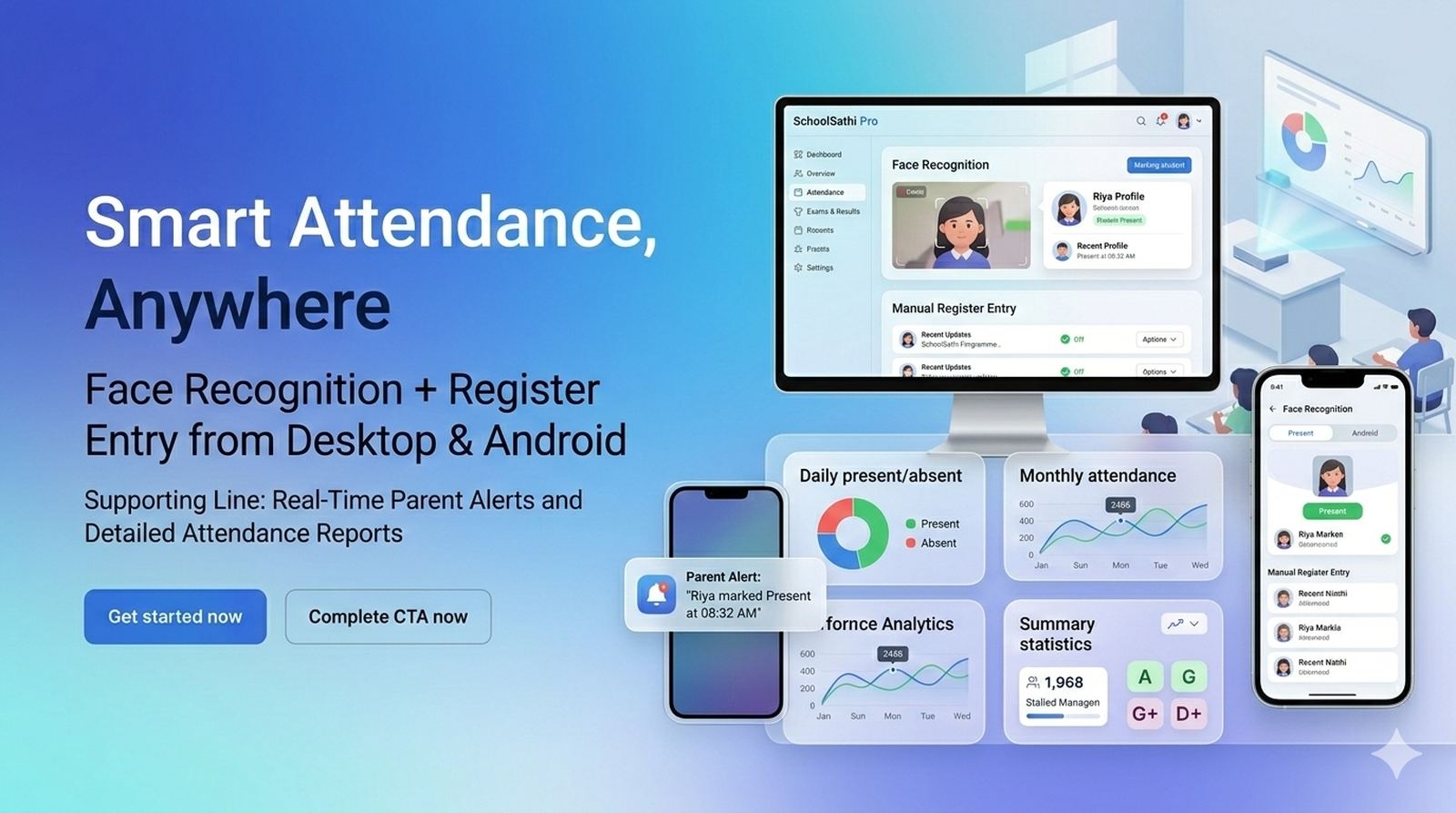
Traditional registers consume valuable minutes in large sections. Manual calling invites inconsistency when multiple teachers share a class. Face-assisted flows, when implemented with discipline, can mark dozens of students quickly while writing records into the same database your school management software already uses—avoiding duplicate spreadsheets that nobody trusts.
Consent, dignity, and opt-out paths
Families deserve clarity: which images or embeddings are stored, for how long, who can access them, and how deletion works when a learner leaves. Some students may opt out for personal reasons; your handbook should describe alternative attendance paths without stigma. Documenting this upfront prevents mid-year conflicts when a parent raises concerns on social media.
Hybrid models are normal
Few mature campuses run exclusively on cameras day one. Most combine recognition-assisted marking with manual overrides for late arrivals, field trips, or technical faults. The goal is one authoritative register per day, not competing tallies. Review our companion page on a face attendance system for school deployments for integration considerations.
Technical realities: lighting, angles, and device hygiene
Algorithms behave differently across uniforms, turbans, masks during health seasons, and outdoor assemblies. Pilot with one grade, capture failure cases honestly, and adjust camera placement rather than blaming teachers. Maintain devices so lenses stay clean—simple maintenance prevents false negatives that erode trust faster than any vendor bug.
Connecting recognition data to academic and fee context
Attendance insights gain power when correlated with transport routes, fee payment patterns, or counselling interventions. That requires ERP-level integration, not a standalone app exporting CSV files weekly. Position your initiative inside a broader school ERP software India roadmap so finance and academics see the same student identity.
Staff training and substitute teachers
Recognition tools fail when only one “tech-savvy” teacher knows override steps. Substitutes must inherit simple checklists: how to fall back to manual marking, how to escalate duplicate profiles, and how to document edge cases for the class teacher. Training should be short, repeated each term, and available in the languages your team actually speaks—not only English PDFs.
Measuring success responsibly
Track time saved at entry points, reduction in proxy attempts, and parent complaints about attendance accuracy. Pair quantitative metrics with qualitative feedback from teachers who shoulder daily classroom reality. If numbers look great but staff morale collapses, the initiative is not successful regardless of vendor marketing.
Where SchoolSathi Pro participates in this journey
SchoolSathi Pro treats attendance—including optional face-assisted workflows—as part of a connected stack alongside fees, exams, and parent communication. Review features, understand investment via pricing, and walk through scenarios in a live demo rather than relying on hardware specs alone.
Implemented with care, a face recognition attendance system for schools becomes invisible infrastructure: students move, teachers teach, and leaders review trustworthy data. Implemented carelessly, it becomes tomorrow’s headline. Choose patience, policy, and integration first—gadgets second.