How to Choose School ERP Software Without Regret in Term Two
Choosing ERP is less about the longest feature list and more about fit, honesty, and support when your data is messy. This framework explains how to choose school ERP software using a scorecard any leadership team can reuse.
Define success metrics before you shortlist vendors
Most regret comes from buying “everything” when the school only needed disciplined fees plus attendance plus parent comms. Pick three measurable outcomes—fee receipt posting time, daily attendance closure, exam result publish delay—and score every vendor against the same scenarios, not slide decks. Cross-read best school ERP software in India (2026) for macro trends, then force each demo to replay your real calendar moments: admission rush, fee hike notices, board practicals.
Integration beats a patchwork of “best-in-class” apps
Ask bluntly whether student, fee, attendance, and exam data share one operational database or sync overnight. Overnight sync fails during peak weeks when two systems disagree and parents receive conflicting messages. Prefer a coherent core aligned with school management software expectations—depth in fewer modules usually beats shallow breadth.
India-specific workflows are non-negotiable
Fee patterns (annual, term, monthly, transport add-ons), sibling rules, board variations, regional language parent mix, and WhatsApp-heavy communication culture are not “nice extras.” Generic global products may miss GST lines, concession approvals, or the way Indian offices actually chase dues. Compare honestly with our school ERP software India pillar and fees management system product notes.
Support, training, and escalation paths
Validate support hours, languages, holiday coverage, and how bugs escalate when your fee window is jammed. A vendor that goes quiet after payment is a liability—ask for named contacts, SLA language you can enforce, and sample onboarding calendars. Pair vendor promises with internal readiness: who owns masters, who approves role changes, and how teachers get micro-training instead of day-long overload.
Total cost of ownership (TCO), not sticker price
Licence fees are one line—add implementation, data migration, device budgets, training, and multi-year renewals. Transparent pricing pages help model budgets; hidden per-SMS or per-student traps do not. Ask for a three-year TCO worksheet in writing.
Security, roles, backups, and clean exits
Role-based access, audit logs, backup frequency, and data export when you leave—negotiate before signing. Schools handle minors’ data; weak roles or shared admin passwords undo ERP benefits fast. If you need a checklist mindset, see common mistakes schools make without ERP to avoid repeating others’ gaps.
Demo script: stress-test with anonymised real cases
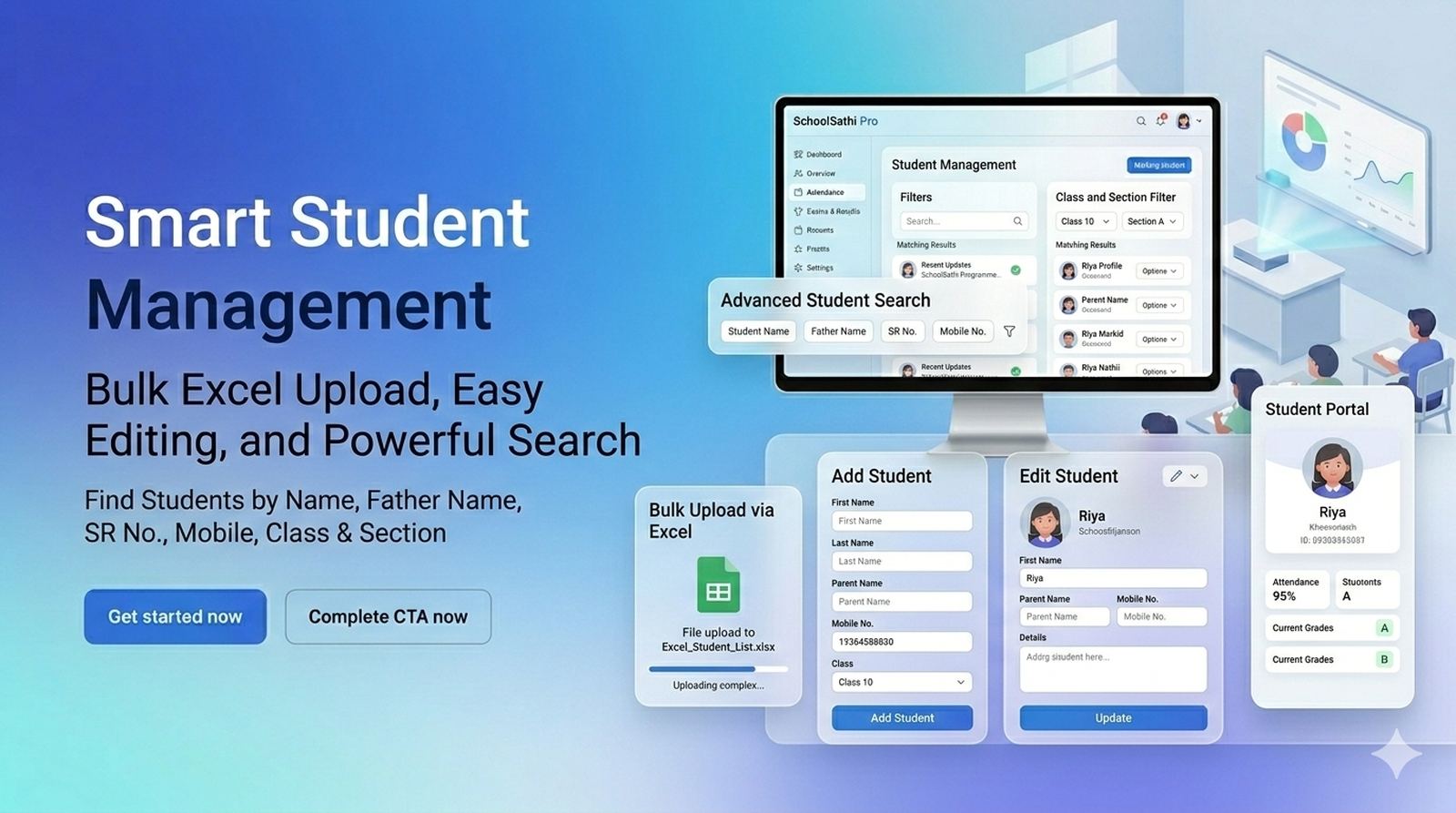
Bring anonymised scenarios: sibling fee rule, mid-year section change, late admission with partial fee, transport route change. Watch whether the demo bends gracefully or needs “we’ll customise later” hand-waving. Evaluate SchoolSathi Pro on this scorecard via features and a candid, scenario-based demo. For cultural contrast, read school ERP vs traditional system before your board meeting.
FAQ
How many vendors should we shortlist?
Two or three serious contenders—more creates fatigue and shallow demos.
Should IT lead selection?
IT advises, but office and academic leads must own workflows—ERP is operational first.
What if we choose wrong?
Contract exit clarity and export rights reduce switching pain—negotiate up front.
Do we need consultants?
Sometimes helpful for large groups; single schools can succeed with vendor onboarding if disciplined.
How do we align teachers and office staff?
Run joint workshops on shared data—ERP succeeds when academic and admin leaders agree on one source of truth.