School ERP vs Traditional System: What Actually Changes on Campus
“Traditional” often means registers, counters, and heroic clerks who remember exceptions in their heads. School ERP does not erase that experience—it tries to preserve what works while making records searchable, consistent, and shareable. Here is a grounded comparison for Indian schools weighing change.
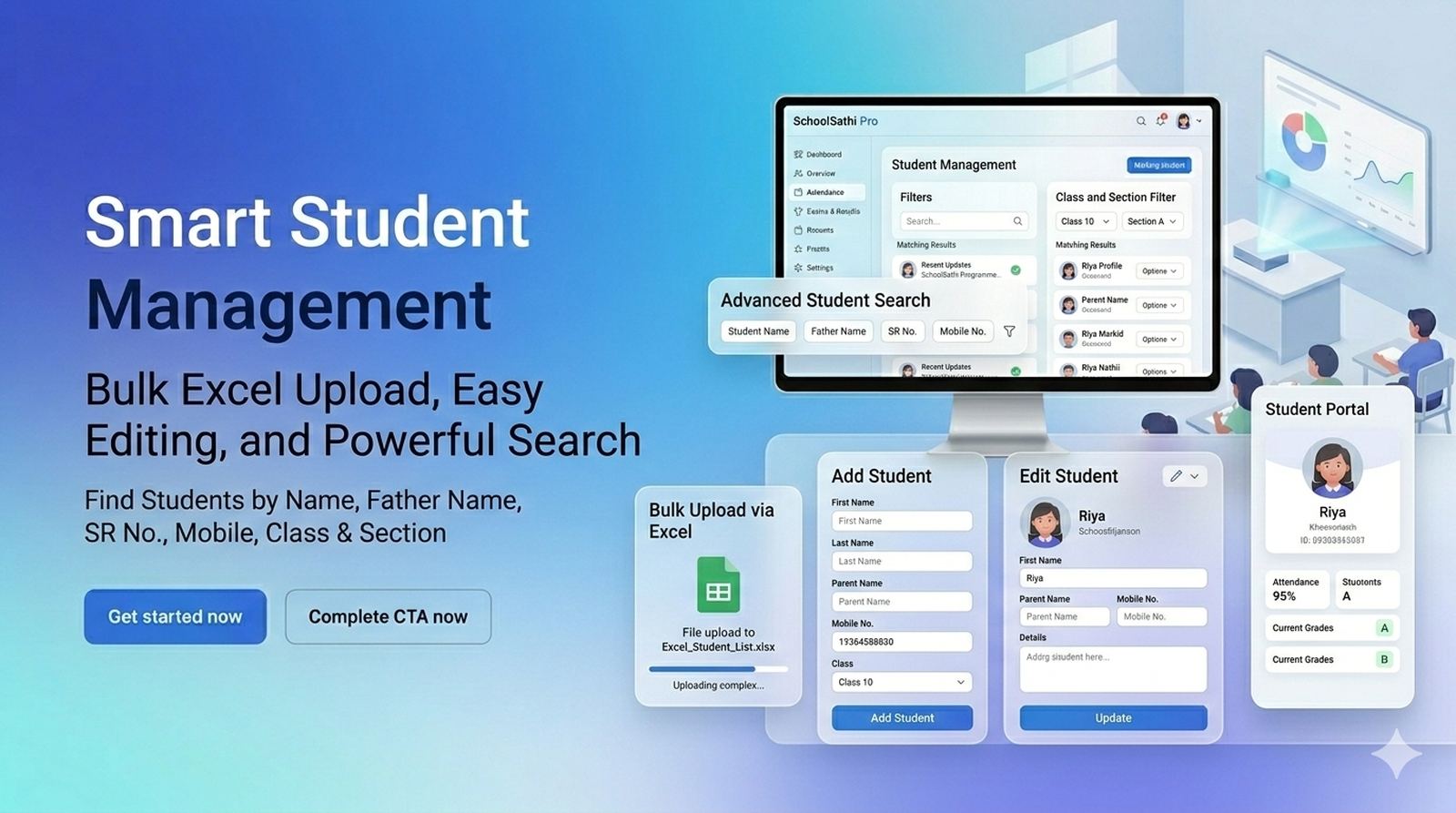
Speed at the window vs speed of insight
Registers can feel fast until leadership asks for trends across sections, terms, or years. Spreadsheets flex until two versions circulate. ERP trades a little upfront discipline for downstream speed: one student ID flowing into fees, attendance, and exams. Our school ERP software India guide expands on evaluation criteria.
Cost: sticker price vs hidden hours
Paper feels cheap until you count nightly reconciliation, mis-filed receipts, and leadership waiting days for summaries. ERP has a licence line—but also saves payroll time when offices stop retyping the same names. Compare honestly with your team’s hourly reality, not only the vendor quote.
Audits, boards, and parent disputes
Traditional systems rely on who kept the file. ERP systems rely on roles, logs, and exports—useful when parents or regulators ask “show me the trail.” That does not make ERP infallible; it makes accountability easier when configured well alongside school management software best practices.
Hybrid reality
Many schools run ERP for fees and academics while keeping ceremonial paper for specific registers during transition. That is fine if everyone agrees which system is authoritative. Split truth is what hurts—pick the source of record and align parents through the SchoolSathi Pro parent app and office workflows.
When traditional still wins short-term
Unstable connectivity, zero device access, or a pending merger might favour delaying ERP—but plan an exit date so “temporary” paper does not become a decade of tech debt. For workload angles, read how ERP reduces school workload.
Data ownership and continuity
Traditional filing cabinets inherit risk: floods, termite, or a single staff member who “knows where everything is.” ERP shifts emphasis to backups, access roles, and export discipline—new risks if ignored, but solvable with vendor clarity. Ask how your provider handles account closure, data portability, and multi-year archives before you sign.
Parent experience in the comparison
Families compare schools partly on communication clarity. Mixed signals—WhatsApp from class teachers, paper from office, portal from a third vendor—feel chaotic. A coherent stack tied to transparent pricing and predictable updates usually wins trust even when occasional tech glitches occur, because the school can show an audit trail and fix issues faster than hunting paper.
Making the decision with your board
Frame the choice as risk management: operational resilience, inspection readiness, and staff retention (less burnout from night reconciliation). Pair this article with digital transformation in schools India for culture tips and how to choose school ERP software when you shortlist vendors.
FAQ
Does ERP mean we throw away all registers?
Not necessarily—many schools phase modules; the goal is one authoritative digital record for operations you choose to migrate first.
Is ERP only for big schools?
No—smaller schools often gain the most per staff hour when duplication disappears—if training is concise.
What is the top risk of staying fully traditional?
Leadership blindness to trends until crises—fee leakage, attendance patterns, academic drift—surface late.
Where can I compare product depth?
See features and book a scenario-based demo on the homepage.